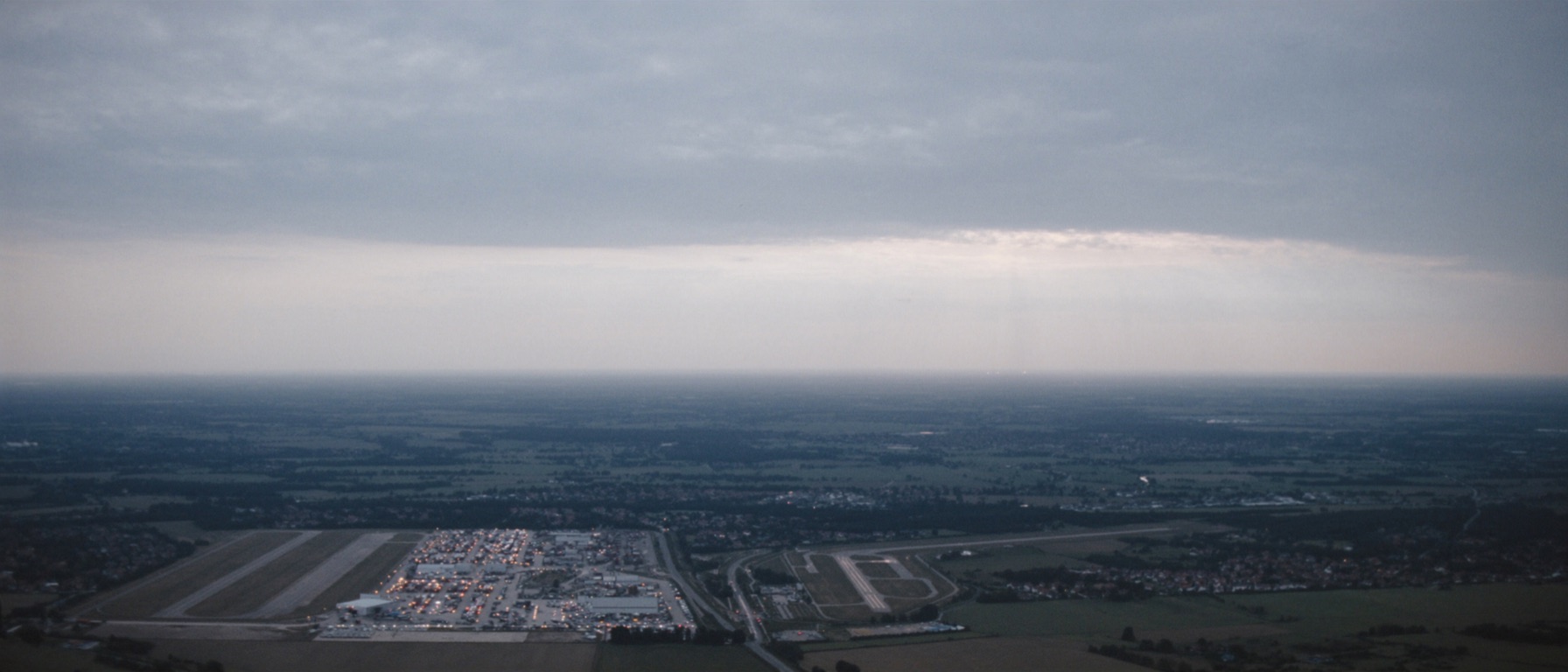
Shut for four hours by two-three drones
≈4 h of suspended traffic · ~20,000 passengers affected · ~100 movements cancelled. The drones were seen — never identified, never engaged.
VAERN Systems is the dual-use decision and control layer for low-altitude airspace. We fuse the sensors available on site — ours, yours or third-party — classify threats with explainable edge-AI, and keep the operator in the loop — supported by AI.
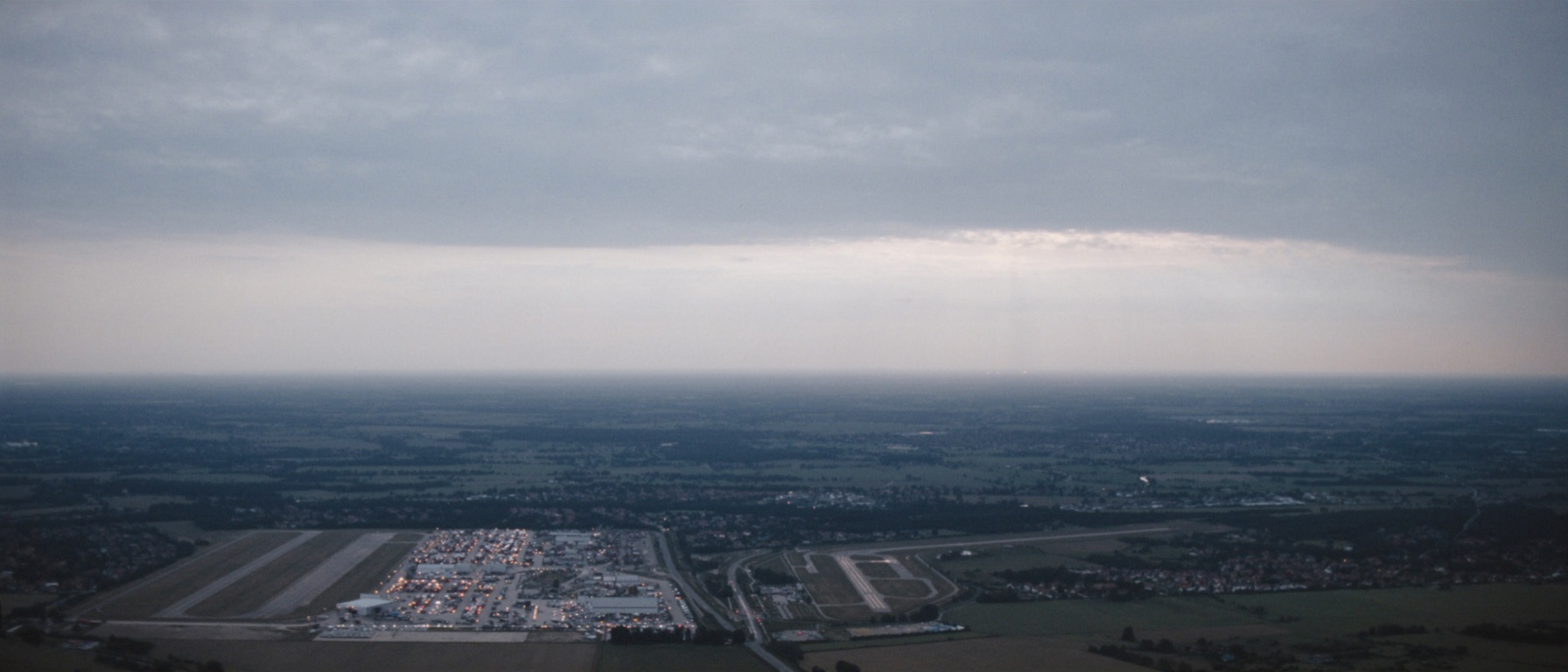
Several sensor positions on the perimeter see the same airspace from different angles. Count and placement depend on the site — that is the point: you get the coverage the location needs, not a fixed package.
Radar gives range, bearing and speed. Passive RF gives protocol and often an identity. EO/IR confirms visually. CORE fuses them into one track with a confidence figure — and shows why. Which sensors are in the mix is decided site by site.
Effect is delivered by an authorised partner effector, never by VAERN, and never without a human decision. VAERN provides the basis, the interface and the audit trail. Effector type is chosen to fit the site and the rules that apply there.
Figures are set per deployment — every site gets the mix it needs, and we publish no numbers we cannot stand behind. The video sequence is AI-generated concept imagery (Higgsfield/Seedance): design intent and an operating picture, not built hardware and not footage from a real deployment. The sensor and track markers on top are drawn from the system's own logic.
An airport, a port and a forward camp each have their own airspace, their own rules and their own equipment already in place. So we do not sell one set of boxes. We compose the layer around what the site actually needs — and build on what you already have.
What has to be protected, where does the threat come from, which rules apply over your heads, and what do you already have? The mix follows from the answers. How many sensors, placed where, of which types — decided there, not in a catalogue.
If you already run radar, cameras or access control, they become part of the picture instead of being replaced. The interfaces are open and vendor-independent. We supply the decision layer on top — not a demand to clear the shelf.
The same layer can stand on a mast at a perimeter, travel with a convoy, or be unpacked at a temporary camp. When the task changes, the setup moves with it. Same software, same operation, throughout.
This is why the product tables carry no fixed figures: ranges, counts and interfaces are set per deployment. We state them once we know the site — and we do not invent them before.
≈4 h of suspended traffic · ~20,000 passengers affected · ~100 movements cancelled. The drones were seen — never identified, never engaged.
F-16s and F-35s against ~$20k airframes — four of them downed. The exchange ratio is the whole argument for a ground-based layer.
~9,500 passengers, diversions to Nuremberg and Stuttgart. The second night is the point: a shutdown teaches the operator the tactic works.
The EU's drone and counter-drone security plan names the gap: not radar — a decision chain that can act on the picture.
Documented incidents · public reporting 2025–26 · stated as reported
The six modules are what we build. They are not a precondition: HAMMER and CORE fuse what is available — VAERN sensors, your existing sensors, third-party radar, RF or cameras — and hand the operator one picture.
Sees the drone. Radar measures range and speed, passive RF picks up the control link, EO/IR puts eyes on it. Your own and third-party sensors come in through the same interface.
Open VIGIL →01 · Detect ForwardPuts the sensing where the threat is. Nodes on a tripod or a vehicle that deploy forward with the task instead of waiting for it.
Open nodes →01 · Detect DatalinkKeeps the nodes connected. If one link drops, traffic reroutes and the node buffers locally until it is back.
Open NEXUS →02 · Connect Edge AIfusion · classification COREWorks out what the track is — and shows its evidence. Fuses every sensor, VAERN's or third-party, into one classification you can audit.
Open CORE →03 · Understand CommandGives the operator one picture and one clear choice. Every consequential decision is authorised by a person — and logged.
Open HAMMER →04 · Decide EffectorHands the authorised decision on. VAERN delivers no effect itself — the interface is effector-agnostic, and integration runs through an authorised partner.
Learn more →05 · EffectMulti-sensor detection: radar, passive RF and EO/IR — VAERN's own or existing third-party sensors.
Resilient mesh links forward nodes into one network.
Explainable edge-AI fuses sensors and classifies tracks.
The operator sees one air picture and authorises the response.
Effectors integrate later via an authorised partner — effector-agnostic by design.
Runway, approach and apron under one air picture — without closure as the only answer.
See the deployment →Critical infrastructure over built-up ground and water — where proportionality decides the response.
See the deployment →Fixed and temporary military sites — from air base to readiness area.
See the deployment →The whole layer on vehicles: sensors, mesh and C2 move with you — the same picture on the move as at a fixed site.
See the deployment →An operator supported by AI — accountable for every decision that matters.
No. VAERN builds the dual-use decision and control layer: sensors, fusion, classification and the operator console — built for civil airspace monitoring and defence tasks alike. Effect is delivered — in a later phase — exclusively via an authorised partner, and the interface is effector-agnostic.
Yes. HAMMER and CORE fuse what is available on site — VAERN sensors, your existing or third-party radar, RF and cameras. Vendor independence is an architectural choice, not an add-on.
No. Every consequential decision is authorised by a person, and the whole chain is logged — from first detection to authorisation. Explainable AI means the operator can see the evidence behind every classification.
The function always comes first: Sensor → VIGIL. Forward node → SCOUT. Datalink → NEXUS. Edge AI → CORE. Command & control → HAMMER. Effector interface → Partner integration. You never need the name to find the function.
The modules are at MVP stage, and we publish no numbers we cannot stand behind. The architecture is open on the platform page, and the TRL roadmap on the investor page — and the console can be seen in a guided demo.
We walk you through five deployment scenarios — airport, energy & port, military base, mobile convoy and helipad & hospital: multi-sensor fusion, explainable classification, and the decision the operator has to authorise. The scenarios are synthetic and the commands simulated — we say so before you ask.
Investor or funder? The market with sources, the roadmap, the TRL status and what the funding is for are on the investors page.