One fused air picture. One accountable decision.
Sensor integration. Shared situational awareness. Human control.
VAERN develops the software and integration architecture around sensors, operators and partner equipment. The focus is a shared air picture, clear decision support and a traceable workflow. Explore that workflow in a HAMMER software demo using simulated data.
The decision layer — and the effectors it can release.
VAERN is the software-defined layer between sensors and response. It fuses what stands on the site or in the field into one track picture, classifies each track with explainable edge AI, and gives the operator one clear choice — with both the evidence and the decision logged. The effectors at the far end — capture nets, kinetic interceptors and RF jammers — are supplied by authorised partners under their own authorisations and integrated by VAERN.
- Multi-sensor fusion — radar, passive RF and EO/IR, from partner or third-party sources, combined into one air picture.
- Explainable edge AI — classification you can audit, at the edge.
- Operator supported by AI — a person authorises every consequential decision.
- Dual-use by design — civil airspace monitoring and defence tasks on the same layer.
- Partner effectors — nets, kinetic interceptors and RF jammers via authorised partners.
- Vendor-independent — the fusion layer does not require VAERN hardware.
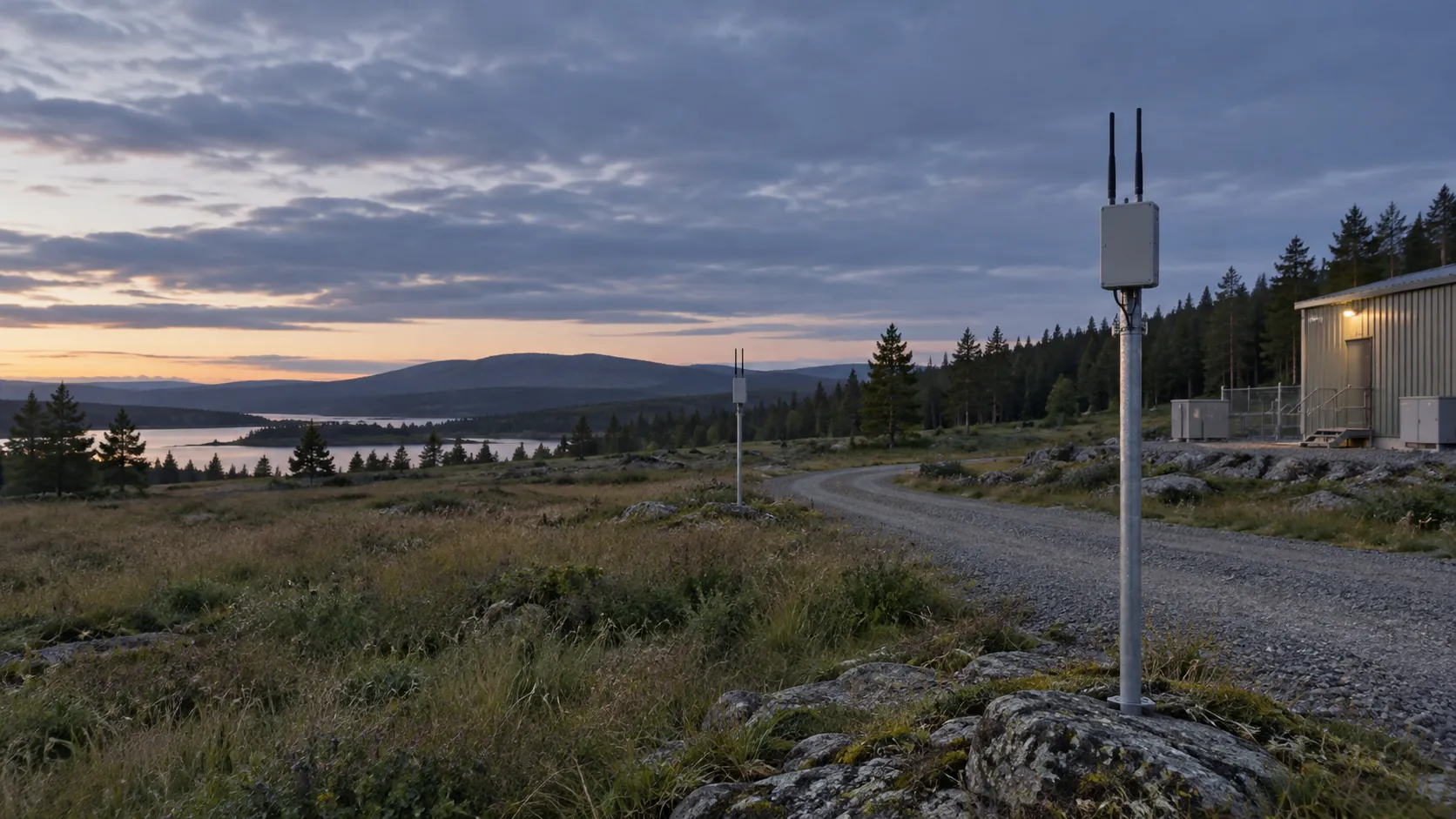 AI illustration
Six modules, mapped to the loop.
The six modules describe one architecture: HAMMER, CORE and NEXUS cover the software and decision layer; VIGIL, SCOUT and STRIKER define the sensor, forward-node and effector interfaces. The design centres on a common operator workflow and the equipment relevant to each site. Explore the investment case.
Sees the drone — radar, passive RF and EO/IR from partner suppliers or third parties, all through the same interface. VAERN-developed sensors are an ambition, not part of today's delivery.
Open VIGIL →01 · Detect Forwardsensor nodeSCOUTPartner hardware · VAERN integration
Puts the sensing where the threat is — nodes on a tripod or a vehicle that deploy forward with the task.
Open SCOUT →02 · Connect Datalink/ meshNEXUSVAERN software · partner radios
Designed to connect nodes, with rerouting and local buffering as capabilities to develop and validate.
Open NEXUS →02 · Connect Edge AIfusion · classificationCOREVAERN softwareWorks out what the track is — and shows its evidence, so the classification can be audited afterwards.
Open CORE →03 · Understand Command& controlHAMMERVAERN software
Gives the operator one picture and one clear choice — and logs who decided what.
Open HAMMER →04 · Decide Effector integrationnet · kinetic · RF jammerSTRIKERPartner effector · VAERN interfaceHands the authorised decision on to the effector — a capture net, a kinetic interceptor or an RF jammer from an authorised partner.
Open STRIKER →05 · EffectorWhat each module does — and what it does not.
| Function | Name | Does | Does not |
|---|---|---|---|
| Sensor | VIGILPartner sensors · VAERN interface | Detects and tracks: radar for range and speed, passive RF for the control link, EO/IR for identification. Third-party sensors enter through the same interface. | Does not classify, and does not decide. Detection is the start of the loop — never the decision. |
| Forward sensor node | SCOUTPartner hardware · VAERN integration | Carries the sensing forward — tripod or vehicle — so coverage follows the force rather than the map. | Is not a precondition. The fusion layer also runs on the sensors already standing on the site. |
| Datalink / mesh | NEXUSVAERN software · partner radios | Designed to link nodes into one network, with rerouting and local buffering as goals to validate. | Does not replace your existing comms, and does not require one central point everything must see. |
| Edge AI | COREVAERN software | Fuses every source into one track and classifies it — with the evidence behind each call kept for audit. | Does not act on its own conclusion. It produces a recommendation, not an engagement. |
| Command & control | HAMMERVAERN software | Shows one fused air picture and one clear choice — and records who authorised what, when. | Does not automate the decision. No consequential call happens without a person. |
| Effector integration | STRIKERPartner effector · VAERN interface | Hands an authorised decision to the effector: a capture net, a kinetic interceptor or an RF jammer — from an authorised partner, or one the operator already holds. | VAERN manufactures no effectors. They are supplied by authorised partners under their own authorisations and national regulation; VAERN integrates them. |
What we build ourselves — and what partners supply.
WE BUILDThe software and integration layer: HAMMER (operator console and C2), CORE (explainable edge AI) and NEXUS (datalink software and integration). It is the layer that binds sensors and effectors into one mobile system — with a human at the controls.
PARTNERS SUPPLYThe architecture accommodates radar, passive RF, EO/IR, communications hardware and authorised effectors from specialist suppliers. VAERN focuses on software and integration; equipment, interfaces and acceptance criteria are defined for each collaboration.
THE OPERATOR WORKFLOWHAMMER demonstrates track assessment, classification evidence, two-step authorisation and a decision record using simulated data. The guided software demo provides a concrete basis for discussing the operator’s task and relevant interfaces.
Applications include oil refineries, power plants, ports, airports, commercial ships and naval vessels, alongside field units, camps and air bases. A common decision architecture, shaped around each operating environment.
From detection to accountable decision.
Multi-sensor detection: radar, passive RF and EO/IR — partner-supplied sensors integrated by VAERN, or the sensors already on site.
NEXUS is designed to link forward nodes into one network.
Explainable edge AI fuses sensors and classifies tracks.
The operator sees one air picture and authorises the response.
Capture nets, kinetic interceptors and RF jammers — supplied by authorised partners under their own authorisations and used only where the law allows. VAERN does not manufacture effectors.
Designed for mobile, forward and open use.
We are designing for fixed and mobile use, building on compatible existing equipment where possible. Operation during connection loss, GNSS disruption and relocation remains to be developed and tested with partners.
- Open / interoperable architecture — designed to avoid vendor lock-in.
- Mobile or stationary deployment — designed for the field and for fixed installations.
- Modular sensor mesh — designed to scale with the task.
- Designed to connect to existing C2 and sensors.
- Free choice of partners and effectors — the interface is designed not to be tied to one vendor.
Designed around ownership, supply chain and human control.
VAERN is 100% Danish-owned and run from Denmark. Human control, clear responsibilities and supplier transparency are central to the architecture.
Thirty minutes in the console says more than the rest of this page.
The demo is a guided walkthrough of HAMMER Panorama on simulated data, with synthetic scenarios matched to your use case — from the first observation to the operator's decision and the decision record. The commands are simulated too — we say so before you ask.